
Energy infrastructure for the production and transmission of green energy between Algeria and Italy
An energy bridge
across the Mediterranean
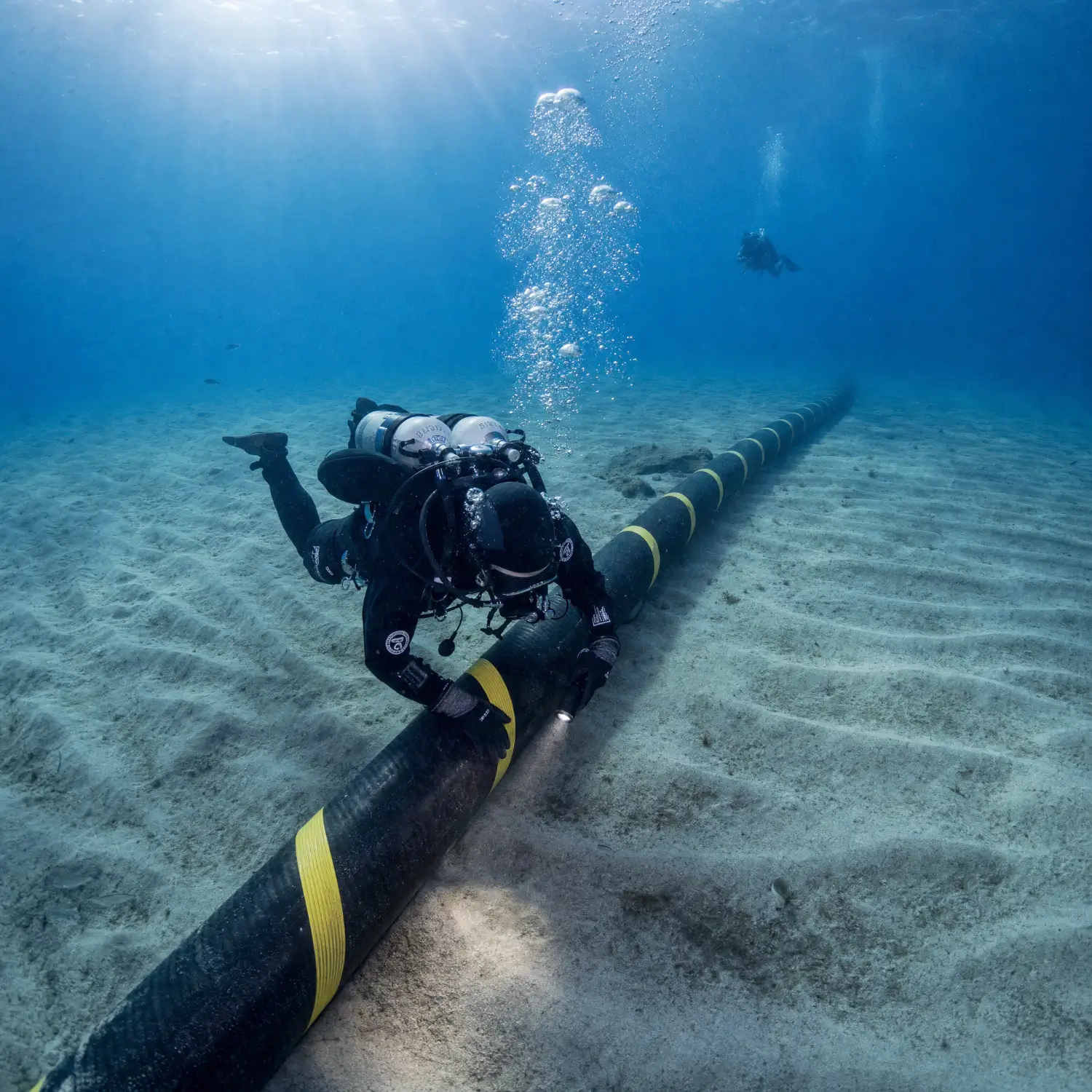
Algeria-Italia Link, or AI-Link, is a new infrastructure for the production and transmission of certified green energy between Algeria and Italy.
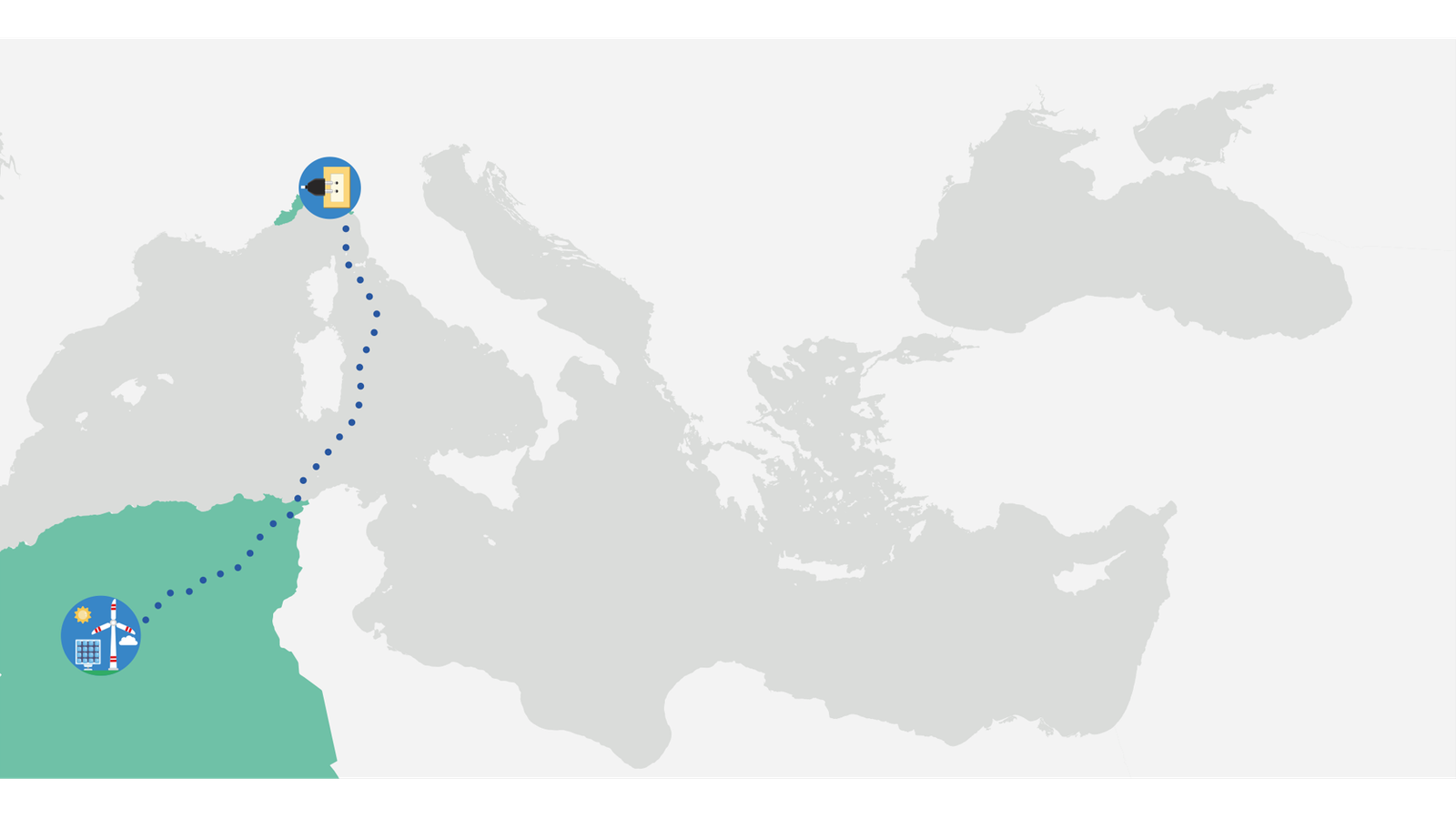
The project includes the development of a renewable energy park with a capacity of at least 5 GW in the Algerian desert, alongside a power interconnection of up to 2 GW stretching approximately 900 kilometres across the Mediterranean Sea and reaching Liguria, where it will deliver part of the renewable energy generated.
The project will contribute to both energy security and the decarbonisation of the electricity sector in Italy, Europe and Algeria.
AI-Link project will be fully financed through private capital, with no impact on end consumers’ electricity bills. Once operational, it will supply the Italian power system with at least 10 TWh of renewable electricity per year — equivalent to the annual consumption of approximately four million households. In addition to supplying Liguria and Italy, particularly for the benefit of industrial consumers, the imported energy could also reach major European industrial hubs. Algeria will benefit from a share of the energy and supporting electrical infrastructure, helping meet the country’s energy needs and contributing to its national decarbonisation targets.
Why AI-Link
AI-Link is the result of a strategic cooperation between Algeria and Italy, aimed at achieving the following objectives:
- enhancing energy security across the Mediterranean;
- supporting the energy transition in Italy, Europe and North Africa towards the achievement of decarbonisation targets;
- unlocking the potential of local natural resources to promote economic and social development in North Africa.
Algeria benefits from one of the highest and most competitive renewable energy potentials in the Mediterranean, capable of exceeding national electricity demand. AI-Link translates this advantage into a concrete cooperation model: part of the energy produced will be allocated to the Algerian market, contributing to local and industrial development, Algeria’s decarbonisation targets, and the strengthening of the national grid. The remaining share will be integrated into European electricity markets, creating a more resilient and interconnected energy system.
Thanks to its strategic position in the Mediterranean, AI-Link represents an enabling infrastructure for deeper energy integration between North Africa and Europe, contributing to the stability of electricity systems, economic competitiveness, long-term price stability, and security of supply, also reducing dependence on fossil fuels.
AI-Link’s values
AI-Link is based on an international partnership focused on the principles of sustainable economic development, energy security, and mutual growth.
The project is aligned with institutional priorities and the broader energy framework, supporting its integration into the North African and European energy systems.
Benefits for Italy and Europe
Renewable, certified, competitive and flexible energy
Supply of certified renewable energy at competitive costs, enabled by more favourable production conditions in North Africa.
A more stable, continuous and flexible energy supply, aligned with Italian and European decarbonisation needs, as well as with market dynamics and end-user demand.
An estimated coverage of 3.2% of national energy demand by 2030, making a significant contribution to future electricity needs.
Minimised land impact: producing the same amount of energy in Italy would require an area larger than the entire Province of La Spezia, whereas AI-Link would require approximately 0.01% of its land area.
Lower national electricity prices by approximately €3/MWh, contributing to an increase in national GDP of more than €25 million over the first 20 years.
Energy transition and sustainability
Reduction of CO₂ emissions in Italy by 3 million tonnes per year.
Supporting the energy transition in line with European policies
Enhanced energy security
Diversification of energy supply sources, strengthening energy security in an evolving geopolitical context.
Greater resilience of the Italian and European electricity grid, supported by a new transmission corridor that enhances the system’s robustness and flexibility.
Private investment, employment and cooperation
Fully private investment, with no impact on consumer electricity bills.
Secondo recenti studi, si stimano circa 3.000 in fase di cantiere e circa 300 FTE in fase di esercizio. L’impatto di crescita industriale dovuta all’arrivo di AI-Link in Italia è stimato in circa 21.000 nuovi posti di lavoro.
Strengthening of Europe–North Africa cooperation, in line with the Mattei Plan and EU policies.
Benefits for Algeria
Social, industrial and employment development
Job creation across both construction and operation, including indirect and induced employment. Recent studies estimate approximately 10,000 jobs during construction and 800–1,000 during operation.
Development of specialised skills and expertise in Algeria, strengthening the renewable energy value chain and fostering diverse capabilities by skill set and geographic area.
Power system and infrastructure development
Supporto ai piani di sviluppo della rete elettrica nazionale, grazie alla realizzazione a carico di Zhero di nuove linee elettriche integrate nella rete algerina per circa 700 km e di infrastrutture locali a beneficio delle comunità locali, con possibilità di un ulteriore utilizzo della tecnologia HVDC per esportare l’energia in eccesso durante i mesi invernali.
Significant local availability of energy.
Stima di circa 5 miliardi di euro di investimenti in asset e infrastrutture locali.
Financial resilience and public revenues
Higher public revenues and an improved trade balance, driven mainly by:
- tax revenues from companies operating in Algeria;
- fees and royalties related to exported energy and the use of the land;
- additional gas savings resulting from the reduced need for fossil fuels to meet the expected growth in electricity demand, making more gas available for export — currently estimated at approximately 0.5 billion cubic metres per year.
€400–500 million per year in GDP contribution.
€1–1.3 billion in local spending during construction, and up to €100 million per year during operation.
Additional economic benefits from the involvement of local companies, local taxes, land-use fees, carbon credits and other sources of revenue.
Energy security and local sustainability
Greater energy security and diversification, with approximately 3 TWh of electricity per year supplied to the domestic market, equivalent to 3–4% of Algeria’s electricity consumption.
Strengthening Algeria’s role, and that of North Africa more broadly, as a strategic energy partner for Europe.
Contribution to Algeria’s national targets: 15 GW by 2035.
Avoidance of 1.0–1.5 million tonnes of CO₂ emissions per year in Algeria, equivalent to a 3–4% reduction in emissions associated with electricity generation.
International support
AI-Link is an innovative energy infrastructure of international relevance, supported by institutions in Italy, Europe, and Algeria.
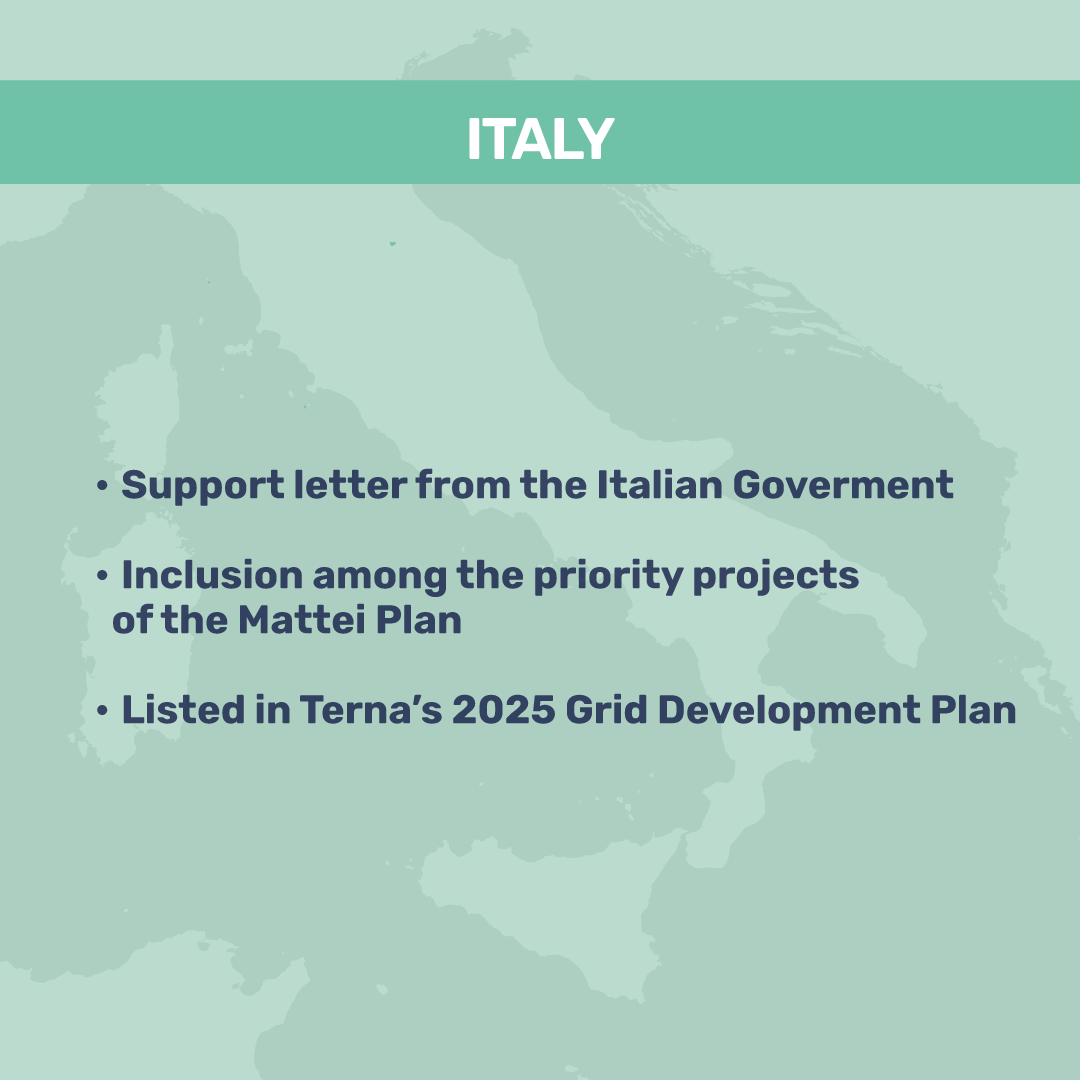
- Lettera di supporto del Governo Italiano
- Inserimento tra i progetti prioritari del Piano Mattei
- Presenza nel Piano di Sviluppo della rete 2025 di Terna
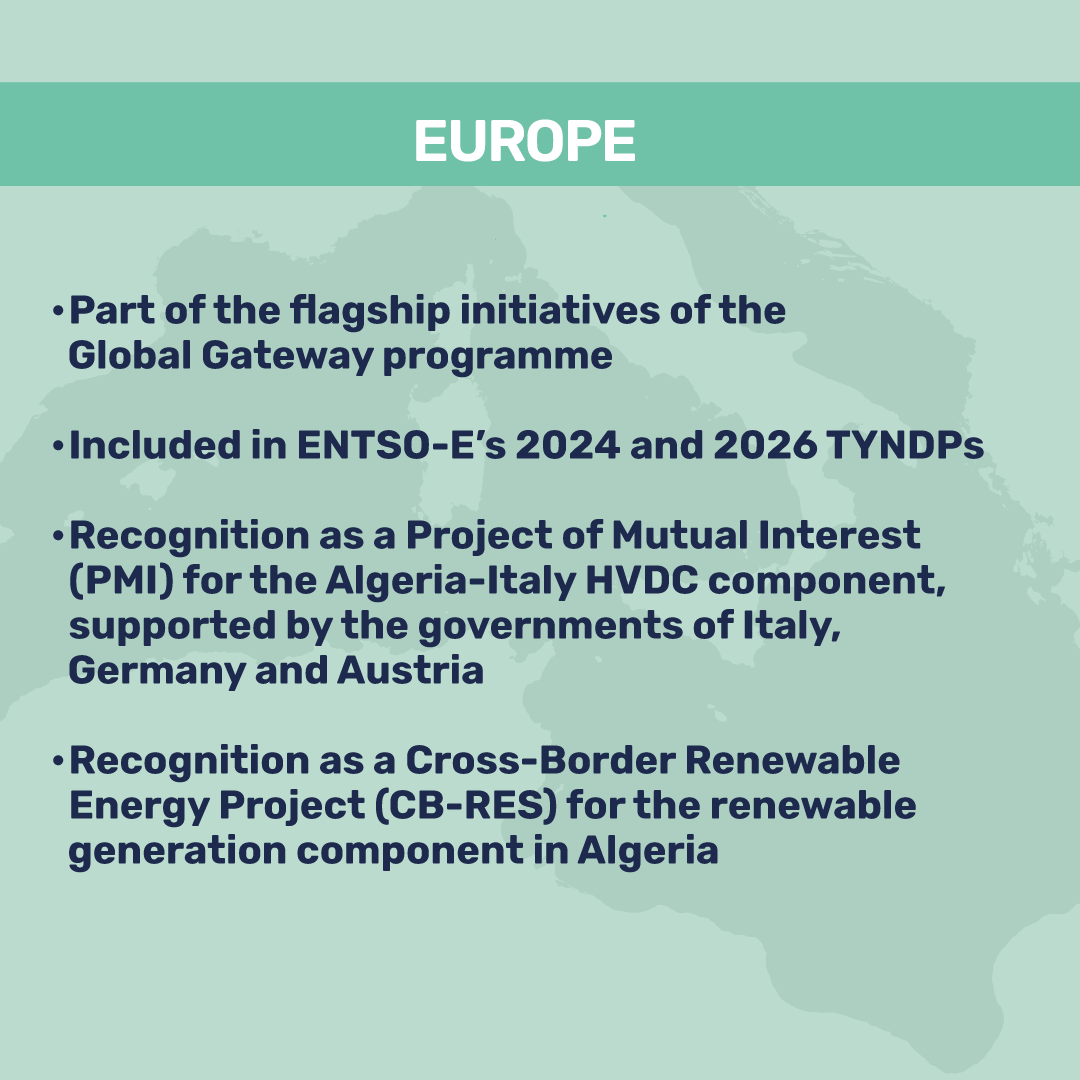
- Parte delle iniziative europee flagship del Global Gateway
- Inclusione nel TYNDP 2024 e 2026 di ENTSO-E
- Riconoscimento dello status di Project of Mutual Interest (PMI) per la componente HVDC Tunisia-Italia con supporto dai governi di Italia, Germania e Austria
- Riconoscimento dello status di CB-RES – Cross-Border Renewable Energy project per il perimetro di generazione rinnovabile in Tunisia
- Lettera di supporto firmata dal Ministro dell’Energia
- Collaborazione tra Zhero e STEG, il TSO nazionale, per lo sviluppo dell’iniziativa
Energy system innovation
The project is promoted by Zhero, a company engaged in the development and operation of infrastructure for the production, storage, and transmission of renewable energy.
Built on more than thirty years of experience in the energy sector of its founders, Zhero relies on an international team to develop programmes that include the integration of renewable energy plants with battery energy storage systems (BESS), the production of green molecules, the development of energy interconnections across Europe, Africa, and the Americas, as well as numerous other initiatives.